Category B driving licence: What you’re allowed to drive and the 2027 reform
 By Rachel · 6 min read
Automatically translated from German. · Read original
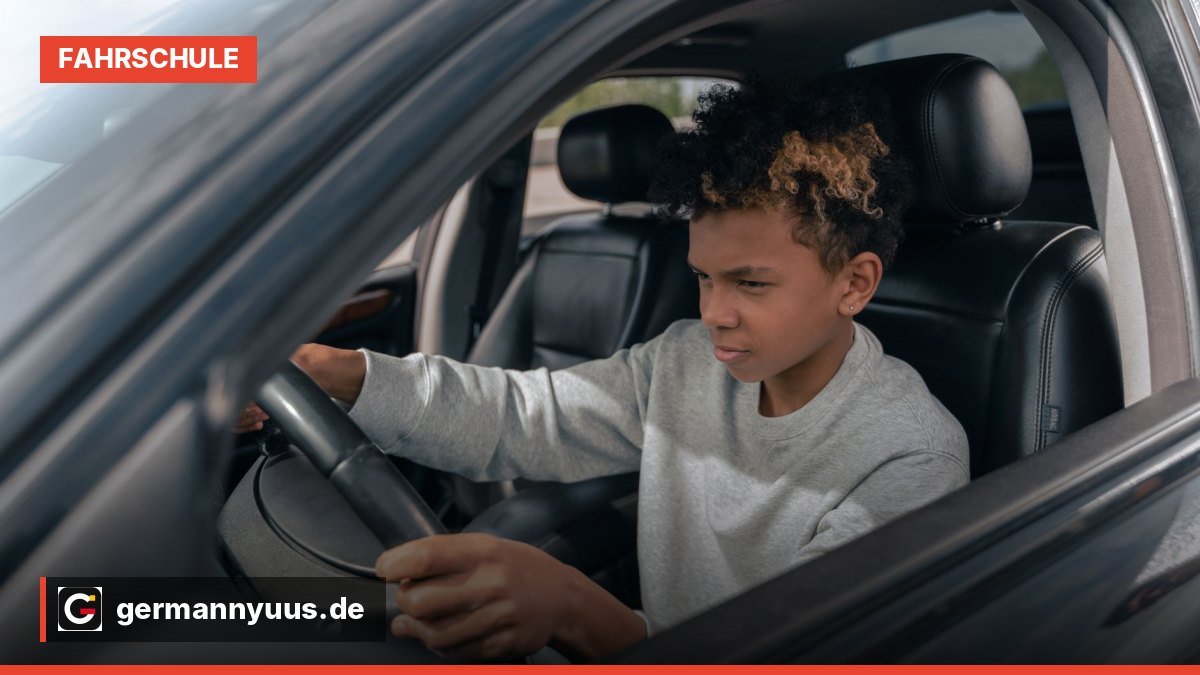
A Class B driving licence is the standard for motorists in Germany and allows the holder to drive a range of motor vehicles, not just passenger cars. From 2027, planned reforms are set to reduce the cost of obtaining a driving licence by up to 1,000 euros.
Key facts at a glance
- A Class B driving licence authorises the holder to drive vehicles with a maximum authorised mass of up to 3.5 tonnes and a maximum of 9 seats.
- It includes categories AM (light motorcycles up to 45 km/h) and L (agricultural tractors up to 40 km/h).
- With the B96 extension, combinations weighing up to 4.25 tonnes can be driven, and with BE, even trailers weighing up to 3.5 tonnes.
- The planned driving licence reform, due to come into effect from 2027, is expected to reduce costs by several hundred euros, or up to 1,000 euros in the best-case scenario.
- Changes include digital theory lessons, fewer theory questions, flexible practical driving sessions and shorter practical tests.
What can you drive with a Category B driving licence?
With a Class B driving licence, you are permitted to drive motor vehicles with a maximum authorised mass of up to 3.5 tonnes. The body style of the vehicle – whether an estate car, people carrier, SUV or saloon – is irrelevant, provided the maximum authorised mass is not exceeded. You can find this weight in Part I of the registration certificate, in field F.1. Furthermore, the vehicle must not have more than 9 seats, which means that, in addition to yourself, you may carry 8 passengers, as reported by *auto motor und sport* on 21 October 2026.
Trailer regulations for a Category B driving licence
Category B also covers trailers with a maximum authorised mass of up to 750 kilograms. If the permissible gross weight of the trailer exceeds 750 kilograms, the permissible gross mass of the entire combination (car plus trailer) must not exceed 3.5 tonnes.
There are extensions for larger trailers:
- B96 extension: Training at a driving school increases the weight limit for the combination to up to 4.25 tonnes.
- BE extension (trailer licence): This permits trailers with a maximum authorised mass of up to 3.5 tonnes. The maximum authorised mass of the combination is limited to 7 tonnes. The BE licence requires 5 compulsory driving lessons and a test.
Other vehicle categories included (AM and L)
A Class B driving licence automatically includes Classes AM and L:
- Class AM: Covers light, two-, three- and four-wheeled mopeds with a maximum engine capacity of 50 cubic centimetres and a top speed of up to 45 km/h. The engine power must not exceed 4 kW (5.4 PS).
- Category L: Permits driving tractors which, by design, are not permitted to travel faster than 40 km/h. When towing a trailer, the maximum speed is 25 km/h. These tractors may only be used for agricultural or forestry purposes.
A special provision allows certain three-wheeled scooters to be ridden with a B licence, provided they have a track width of at least 46 centimetres at the front axle and a foot brake acting on both axles. For vehicles with a power output exceeding 15 kW (20.4 PS), a minimum age of 21 is required and the wearing of a helmet is compulsory.
Motorcycles with the B196 extension
Anyone wishing to ride motorbikes can obtain the B196 extension. The requirements are a minimum age of 25 and possession of a Class B driving licence for at least 5 years. Driver training at a driving school, comprising at least 9 lessons of 90 minutes each (4 theory and 5 practical lessons), is required. With a B196 driving licence, you may ride Class A1 motorcycles, i.e. motorcycles and scooters with an engine capacity of up to 125 cm³ and a maximum engine power of 11 kW (15 PS). The power-to-kerb weight ratio must not exceed 0.1 kW per kilogram. Please note that the B196 licence is only valid in Germany and driving abroad is not permitted.
2027 driving licence reform: What is set to change for learner drivers
The planned driving licence reform, due to come into force in early 2027, promises significant simplifications and cost reductions for learner drivers. According to the *Berliner Zeitung* of 21 October 2026, Federal Transport Minister Steffen Bilger (CDU) forecasts savings of up to 1,000 euros. Currently, the average cost of a Class B driving licence is around 3,400 euros.
An overview of the planned changes
The draft bill, which was approved by the Cabinet in May 2026, provides for the following:
| Area | Current regulations (until the end of 2026) | Planned change (from 2027) |
|---|---|---|
| Theory lessons | Compulsory attendance at a driving school | Can be completed entirely digitally via an app |
| Theory test | Over 1,100 questions, complicated marking scheme | Around a third fewer questions, simplified marking scheme |
| Practical driving sessions | 12 compulsory driving sessions (5 on country roads, 4 on the motorway, 3 at night) | Flexible number; decided by the driving instructor based on the learner’s ability |
| Practice drives | Only at the driving school | Additional practice drives with an accompanying person (e.g. parents) are possible after passing the theory test |
| Practical test | Longer test duration | Actual driving time reduced to the EU minimum of 25 minutes |
Controversies and assessments regarding the reform
The planned reform has met with mixed reactions. Whilst the ADAC believes cost reductions of up to a third are possible and welcomes the option of accompanied practice drives, the TÜV Association has expressed concerns. Richard Goebelt of the TÜV Association warns against a ‘light’ driving test, as 25 minutes is not sufficient to properly assess driving competence in heavy traffic. The Federal Association of Driving Instructors’ Associations is also calling for a mandatory in-person component and assessments of learning progress prior to the test, so as not to jeopardise road safety.
Ingo Koßmann from the Federal Institute for Roads and Transport sees the draft as “a really good move”. He points to studies on accompanied driving from the age of 17, which have shown that having an accompanying driver increases safety and leads to more learner drivers passing their test. Anyone concerned about the exact impact on costs can also use our percentage calculator to work out potential savings.
Is it worth waiting to get your driving licence?
Federal Transport Minister Bilger played down expectations of immediate price reductions following the reform. He pointed out that prices would not fall straight away, but that the market would ultimately regulate itself. Anyone starting their driving lessons now will also avoid long waiting times that could arise from a potential rush once the reform comes into force.
The biggest opportunity for savings lies with the learner driver themselves anyway. According to the TÜV Association, around 44 per cent failed the theory test in 2025. Each retake incurs fees and often requires additional driving lessons. Thorough preparation for the theory test can therefore lead to significant cost savings.
Frequently asked questions
What is a Class B driving licence?
A Class B driving licence is the standard car driving licence in Germany, which has been issued since 2013 and entitles the holder to drive motor vehicles with a maximum authorised mass of up to 3.5 tonnes and a maximum of 9 seats.
Which vehicles can I drive with a Class B licence?
With a Class B licence, you are permitted to drive cars, vans, SUVs and saloon cars, as well as mopeds (Class AM) and agricultural or forestry tractors (Class L) under certain conditions.
How much does a Class B driving licence cost?
On average, learner drivers currently pay around 3,400 euros for a Class B driving licence, although costs can vary significantly from region to region.
How much money can I save as a result of the 2027 driving licence reform?
The planned driving licence reform from 2027 is expected to result in savings of several hundred euros, and in the best-case scenario even up to 1,000 euros, according to forecasts by the Federal Minister of Transport.
Can I tow a trailer with a Category B driving licence?
Yes, you are permitted to tow trailers with a maximum authorised mass of up to 750 kilograms. For heavier trailers, the maximum authorised mass of the combination (car plus trailer) must not exceed 3.5 tonnes. For larger trailers, there are the B96 and BE extensions.
All information is provided without guarantee. Prices as per the brochure; regional variations may apply.
Sources: auto motor und sport · Berliner Zeitung · Berliner Kurier. As at: 21 October 2026.