Living in Schleswig-Holstein: Experiences – A Comprehensive Guide
 By Rachel · 5 min read
Automatically translated from German. · Read original
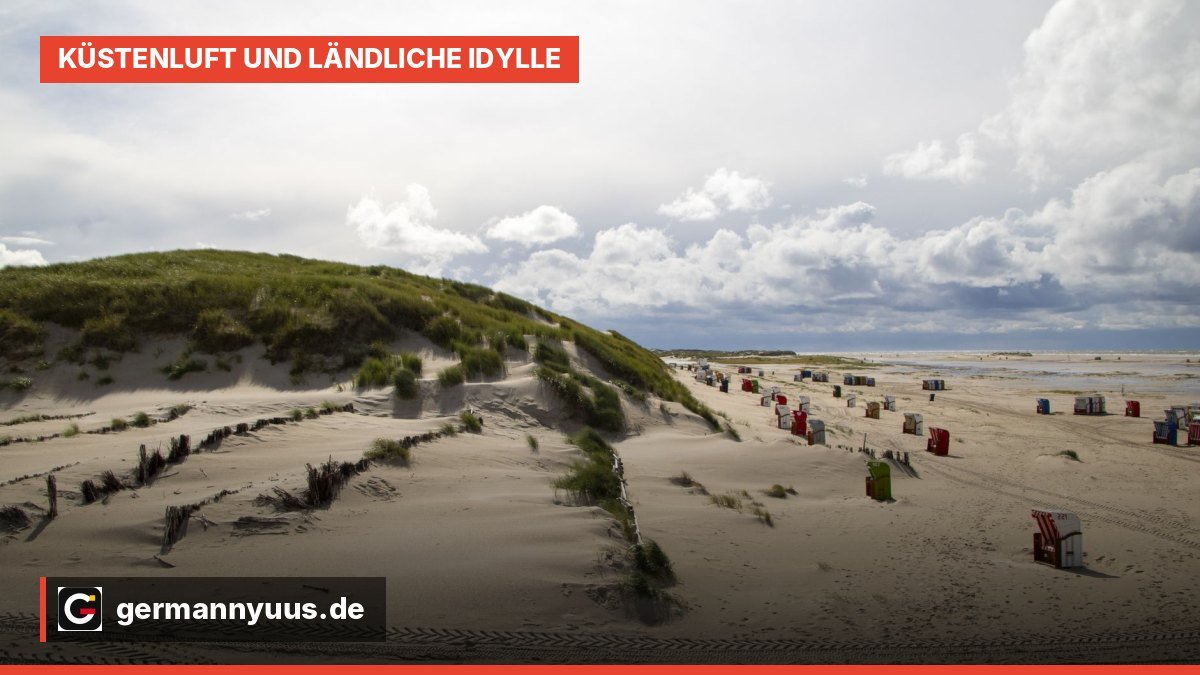
Experiences of life in Schleswig-Holstein offer a wide range of insights, from the maritime atmosphere of the North Sea to the peaceful rural idyll further inland. Germany’s northernmost federal state attracts both families and professionals who value nature, culture and a high quality of life. This guide answers the most important questions and provides specific figures that characterise living and daily life in the region.
Key facts at a glance
- Schleswig-Holstein covers an area of approximately 15,786 km² and has a population of around 2.9 million (according to www.immobilienscout24.de).
- The average rent ranges from €7 to €38 per m², with the average exceeding €10 (www.immobilienscout24.de).
- Property prices start at €540 per m² and go up to €17,890 per m² (www.immobilienscout24.de).
- The state capital, Kiel, and the Hanseatic city of Lübeck are among the region’s most culturally and economically significant centres (www.immobilienscout24.de).
- The region boasts over 1,000 km of coastline, numerous lakes and extensive woodlands (www.ndr.de).
Why Schleswig-Holstein is an attractive place to live
The combination of a maritime climate, a distinctive cultural landscape and a well-developed infrastructure makes life in Schleswig-Holstein attractive. Cities such as Kiel and Lübeck offer a vibrant nightlife, numerous museums and universities, whilst the surrounding countryside promises tranquillity, opportunities to experience nature and space for personal projects. According to www.ndr.de, “Schleswig-Holstein has a lot to offer – whether it’s the North Sea, the Baltic Sea or the Kiel Canal”. This diversity is also reflected in the range of housing options, from modern city flats to historic farmhouses in rural districts.
Housing options and prices – an overview
The property market in Schleswig-Holstein shows marked differences between coastal regions and the inland areas. Average rents for flats are over €10 per square metre, ranging from €7 to €38. When buying a property, the average price is more than €2,900 per square metre, with prices ranging from €540 to €17,890 per m². Houses to let command an average rent of more than €11 per m², whilst the purchase price for houses starts at €1,960 per m² and can reach up to €21,260 per m².
| City / Region | Average rent (€/m²) | Average purchase price (€/m²) | Typical types of accommodation |
|---|---|---|---|
| Kiel | 12–15 | 3,200–4,500 | Modern flats, refurbished older buildings |
| Lübeck | 10–13 | 2,900–4,200 | Historic brick flats, townhouses |
| Flensburg | 9–12 | 2,600–3,800 | Detached houses, rental flats |
| Sylt (coast) | 18–38 | 5,000–17,890 | Holiday flats, luxury homes |
The table shows that prices on the coast are significantly higher, whilst the areas surrounding cities such as Kiel, Lübeck and Flensburg offer good value for money.
Popular towns and their atmosphere
Kiel, the state capital, captivates with its location right on the fjord and a high concentration of universities, research institutes and maritime attractions. Students and young professionals appreciate the vibrant dining scene and the proximity to the water. Lübeck attracts families and culture lovers in particular with its historic old town, famous brick Gothic architecture and proximity to the Baltic Sea. The Hanseatic city offers a high quality of life in a setting steeped in history, combined with modern infrastructure. The district of Pinneberg, bordering directly on Hamburg, is a favoured place to live for commuters seeking a peaceful residential environment with good transport links to the metropolitan region’s job market.
Quality of life and leisure activities
Leisure activities range from water sports on the North Sea to hiking in Holstein Switzerland. Popular destinations include the Friedrichskoog seal sanctuary, the Kalkberg Cave in Bad Segeberg and the UNESCO World Heritage Site of Lübeck. According to www.ndr.de, “of course, you simply cannot just drive past the state capital of Schleswig-Holstein. This is especially true during Kiel Week.” The region also offers an extensive network of cycle paths and walking trails linking the Kiel Canal and the coastal landscape.
Daily life and infrastructure
Public transport is well developed; transport operators provide services within the towns and cities and to rural districts. Schools, doctors’ surgeries and shopping facilities are widely available in the towns and cities, whilst in the surrounding areas one often has to accept short car journeys. Broadband roll-out is progressing, making working from home and digital services readily accessible. For car owners, there are attractive options at petrol stations and for parking, particularly in the larger towns.
Integration and Work
Schleswig-Holstein’s economy benefits from the shipping, tourism, food industry and renewable energy sectors. Jobs are often found in the coastal towns, in logistics along the canal, and in the technology centres of Kiel and Lübeck. The region promotes integration through language courses and integration programmes for new arrivals, which makes the transition into the labour market easier.
Frequently Asked Questions
Which are the largest cities in Schleswig-Holstein?
The largest cities are Kiel (the state capital), Lübeck, Flensburg and Neumünster. Each city offers a different way of life, ranging from an urban vibe to a historic atmosphere.
How are property prices developing in Schleswig-Holstein?
Prices are rising particularly in coastal regions and near major cities such as Kiel and Lübeck. The average price for flats is over €2,900 per m², although prices can range up to €17,890 per m².
What leisure activities are available in the region?
Popular activities include sailing and surfing on the North Sea, visits to the Friedrichskoog seal sanctuary, tours of the Kalkberg Cave and cultural events during Kiel Week.
What are the transport links like in rural areas?
Rural districts are well connected to the regional bus network, although in some cases a car is necessary for getting about. The expansion of the cycle path network is improving conditions for cyclists.
What advantages does living in Schleswig-Holstein offer families?
Families benefit from a high quality of life, well-equipped schools, numerous leisure opportunities in the countryside and a relatively peaceful living environment, particularly outside the major cities.
All information is provided without guarantee. Prices as per the brochure; regional variations may apply.
Sources: Immobilienscout24 – Schleswig-Holstein: Living & Lifestyle · NDR – 12 things you must do in Schleswig-Holstein. As at 31 October 2026.