
Nuremberg Airport: Typo triggers hijacking alert – fighter jets escort holiday flight
 By Rachel · 2 min read
Automatically translated from German. · Read original
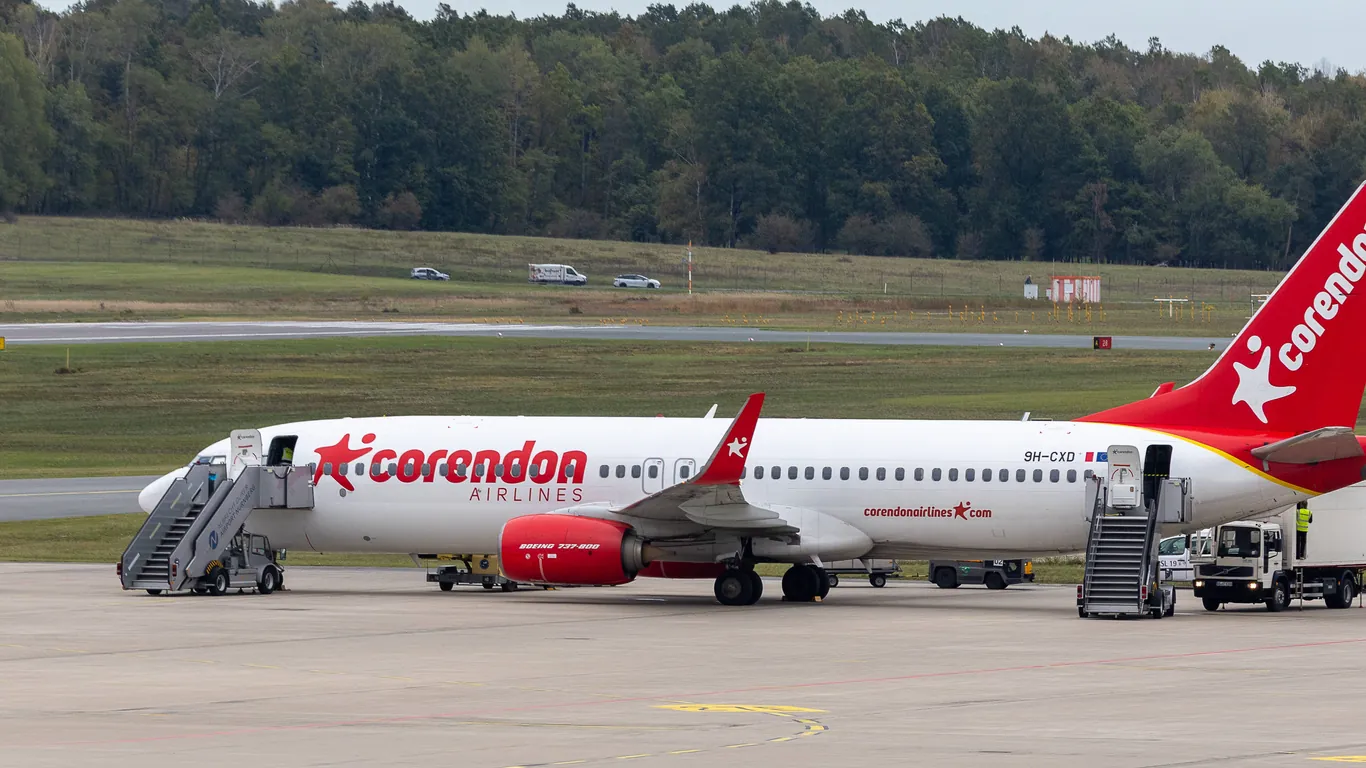
A suspected hijacking alert triggered a major operation at Nuremberg Airport on Tuesday. A passenger aircraft from Corfu had transmitted the emergency code for a hijacking shortly after take-off. Fighter jets from several countries escorted the aircraft, whilst special forces stood by on the ground. However, according to the latest findings of the investigation, it was all a mistake: the pilot is said to have simply made a typing error.
7,500 instead of 7,600: a transposed digit with major consequences
The Boeing 737-800, which according to t-online was a Corendon Airlines aircraft, had taken off from the Greek island of Corfu. Shortly afterwards, the on-board radio failed and the crew could no longer be contacted.
According to police reports, the pilot intended to report the radio failure via the transponder. In aviation, code 7600 is designated for this purpose. However, code 7500 was transmitted instead – the internationally recognised signal for a hijacking. Once a code has been transmitted, it cannot be retracted.
To put this into context: there are three key emergency codes in aviation. 7500 indicates a hijacking, 7600 a radio failure and 7700 a general emergency. The German Air Traffic Control Authority provides further details.
Pilot only realised the mistake when fighter jets appeared
The pilot was apparently unaware of the input error at first. As a spokesperson for the Middle Franconia police told the dpa, he only realised his mistake when military aircraft appeared alongside his plane.
The escort began whilst the aircraft was still in Croatian airspace. It was then taken over by interceptors from the Austrian Armed Forces, before two Eurofighters from the German Air Force’s Tactical Air Force Squadron 74 escorted the aircraft through German airspace all the way to Nuremberg.
Major operation at Nuremberg Airport
On the ground, emergency services prepared for a worst-case scenario. At Nuremberg Airport, take-offs and landings were temporarily suspended, and an access road was closed. Among those deployed were the Bavarian Police Support Command (USK) and a negotiation team specially trained to deal with hijackers.
There was little time for preparation. Less than an hour elapsed between the distress signal and the Boeing’s landing. Police spokesperson Michael Petzold praised the emergency services despite the false alarm and described their response as an “extremely outstanding performance”.
No investigation against the pilot
The situation on board remained calm throughout. The police are not investigating the pilot, as, according to current findings, he did not act intentionally. According to *Der Spiegel*, the aircraft’s radio was in fact faulty, which explains the request to report a technical fault.
The incident highlights just how closely interlinked safety procedures are within European airspace: a single incorrect code is enough to trigger a response from the military and police in several countries within minutes.